
Standing tall in the heart of downtown Austin, the Texas State Capitol is one of the most iconic and recognizable buildings in the United States. A powerful symbol of Texas pride, independence, and resilience, the Capitol serves as both the seat of state government and a cultural treasure. With its majestic dome, sprawling grounds, and rich history, it embodies the spirit of the Lone Star State. Whether you’re a visitor exploring Austin for the first time or a lifelong Texan, the Texas State Capitol offers an unforgettable experience that blends history, architecture, and civic importance.
More about Austin, TX here
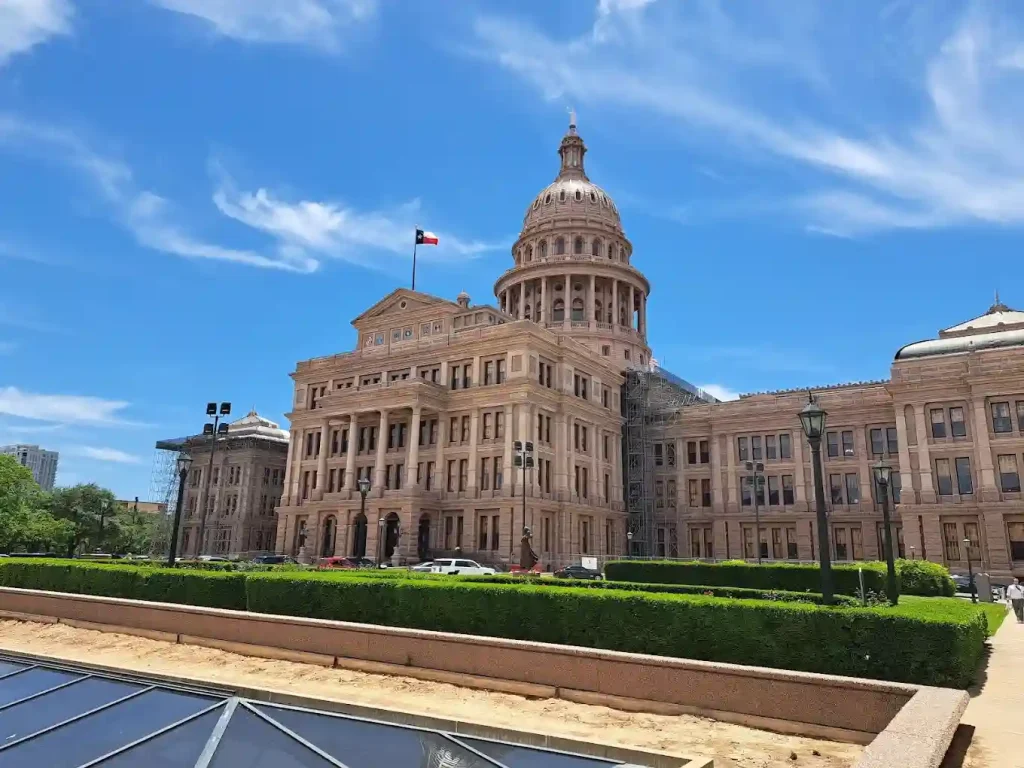
Exploring the Texas State Capitol
Located at 1100 Congress Avenue, the Texas State Capitol dominates Austin’s skyline with its grandeur and commanding presence. Completed in 1888, it stands as a testament to the ambition and craftsmanship that define Texas. The Capitol grounds encompass 22 acres of beautifully landscaped lawns, adorned with monuments, memorials, and oak-lined pathways that invite exploration.
Visitors often begin their journey along the Great Walk, a tree-lined promenade leading to the building’s grand south entrance. The view from here is one of the most photographed in Austin, capturing the Capitol dome framed against the Texas sky. Inside, the marble halls and ornate chambers create a sense of both historic reverence and ongoing civic vitality, as this is still an active seat of government for the Texas Legislature and Governor’s Office.
History & Architectural Significance
The Texas State Capitol was designed by architect Elijah E. Myers and built using locally sourced “Sunset Red” granite from Marble Falls, giving it its distinctive pinkish hue. When completed, it was the seventh-largest building in the world and remains taller than the U.S. Capitol in Washington, D.C., by nearly 15 feet—a point of pride for many Texans.
The design of the Capitol blends Renaissance Revival and Classical architectural styles, featuring a massive rotunda, intricate detailing, and a dome crowned with a statue of the Goddess of Liberty. Inside, the circular rotunda serves as the building’s centerpiece, surrounded by portraits of past governors and presidents of the Republic of Texas.
The Capitol underwent a major restoration project in the 1990s to preserve its beauty and functionality. This included updates to its structure, lighting, and decor, ensuring that the building continues to stand as a living monument to Texas history and democracy.
Tours, Exhibits & Legislative Role
The Texas State Capitol is not only a historic site but also a working government building where visitors can witness democracy in action. The Texas Legislature meets here every two years, and visitors can observe sessions, committee hearings, and other proceedings when the legislature is in session.
- Guided Tours – Free tours are available daily, providing an informative look at the Capitol’s history, architecture, and role in state government. Knowledgeable guides share stories about the building’s construction, significant events, and the unique character of Texas politics.
- Self-Guided Exploration – For those who prefer to explore at their own pace, brochures and maps are available, allowing visitors to view the rotunda, chambers, and surrounding grounds.
- Exhibits & Artifacts – Displays throughout the Capitol showcase Texas history, from early statehood to modern legislation. Historical documents, artworks, and artifacts bring the state’s legacy to life.
- Capitol Extension – Opened in 1993, this underground addition houses offices, committee rooms, and exhibits while preserving the Capitol’s exterior beauty.
Through these tours and exhibits, visitors gain a deeper understanding of Texas’ political evolution and enduring pride in self-governance.
Events, Ceremonies & Educational Programs
The Capitol is also a vibrant center for public events, civic ceremonies, and educational programs that celebrate Texas heritage and democracy.
- Public Gatherings & Rallies – The Capitol grounds frequently host public events, from advocacy rallies to state celebrations.
- Holiday Festivities – Seasonal events such as the Texas Capitol Christmas Tree Lighting draw families and visitors from across the state.
- Cultural Ceremonies – Veterans’ commemorations, Independence Day celebrations, and historical anniversaries are regularly observed at the site.
- Educational Programs – The Capitol Visitors Center, located in the restored General Land Office building, offers interactive exhibits, films, and activities for students and tourists. School tours emphasize the importance of civic engagement and state history, making the Capitol an essential stop for Texas education programs.
These events and programs highlight the Capitol’s ongoing role as a living institution—one that connects Texans to their shared heritage and democratic values.
Why the Texas State Capitol is Central to Austin’s Heritage
For the city of Austin, the Texas State Capitol is much more than a government building—it’s the heart of the community and a defining feature of the city’s identity. Its presence influences Austin’s skyline, economy, and culture, serving as both a political hub and a historic landmark that draws millions of visitors each year.
Residents and tourists alike value the Capitol for its:
- Architectural Grandeur – A masterpiece of design that symbolizes the power and pride of Texas.
- Historical Importance – Preserving over a century of state history and civic leadership.
- Community Engagement – Hosting public events and educational programs that unite Texans across generations.
- Cultural Symbolism – Representing Texas independence, perseverance, and progress.
A Timeless Symbol of Texas Pride
The Texas State Capitol stands as a timeless emblem of the state’s history, spirit, and ambition. Its soaring dome, elegant corridors, and active civic life embody the pride and independence that define Texas itself. For Austin, it is more than a landmark—it is a gathering place, a learning center, and a beacon of democracy. Whether you visit to admire its architecture, learn about its history, or participate in civic life, the Texas State Capitol offers an experience that captures the very essence of the Lone Star State.